
Complete Ear Trainer
Binary Guilt SoftwareMusic
4.6351.00 Reviews
- Version
- 2.7.4-186 (121186)
- Installs
- 1.00M
- Age Rating
- Everyone
Screenshots
Our Review of Complete Ear Trainer
 Analysis by Appyee
I find ear training most useful when it connects a sound I hear to a choice I can make: recognizing an interval, checking my guess, and noticing what I missed. That practical loop is the reason I would try Complete Ear Trainer. It turns listening into short, focused decisions rather than asking me to study music theory in the abstract, which makes practice easier to fit around playing or listening.
Where it fits in a musician’s routine
This is a music game from Binary Guilt Software, and its purpose is more specific than a general music-learning app: it gives me a place to practise identifying musical sounds by ear. I’d reach for it between instrument practice sessions, while waiting for a lesson to begin, or when I have a few quiet minutes and want to do something more deliberate than replaying a song. It is free to start, rated for Everyone, and has optional in-app purchases priced from $0.99 to $9.99 per item.
That focus is useful if you already play an instrument, sing, or are learning to understand how notes and chords relate. It is less suitable if your main goal is learning an instrument’s physical technique, reading notation from scratch, or getting a full course in harmony. An ear-training exercise can sharpen recognition, but it will not replace the instrument, a teacher, or time spent making music.
What a small practice session can do
A realistic use is a short session before rehearsing: I can work on one listening skill, then try to notice the same kind of sound in the music I’m about to play. The key is to treat a correct answer as a prompt to listen again, not as proof that the skill is mastered. If I keep confusing two sounds, I would slow down, focus on that distinction, and return to it later rather than racing through exercises for a score.
For beginners, that makes the app approachable without pretending ear training is effortless. For experienced musicians, it offers a focused way to check a weak spot instead of doing broad practice that may not address it. The benefit depends on using what you hear outside the game: after identifying an interval, try singing it or finding it on your instrument. That extra step turns a quiz response into a musical reference you can call on later.
Complete Ear Trainer has a 4.7 average from around 7.1K ratings, and it has been installed over 500K times. Those figures suggest that it has found an audience, but I would judge it by whether its exercises match my current level and keep me listening carefully. It first appeared on June 30, 2014, and version 2.7.3-185 (121185) supports Android 5.0 and later.
From the first answer to the next session
Have you ever found yourself humming along to a song and wondering if you could train your ears to identify each note? Well, that's where Complete Ear Trainer comes into the picture. As someone who's always been fascinated by music but never quite knew how to bridge the gap between listening and understanding, I decided to give this app a whirl. Trust me, it's been quite the auditory adventure!
Getting Started with Complete Ear Trainer
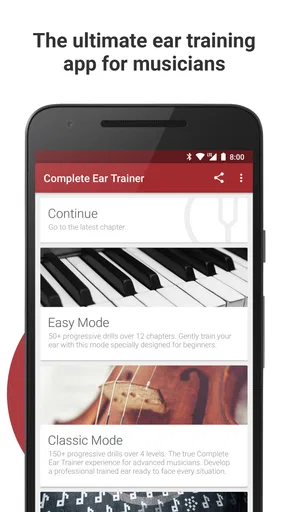
First things first, downloading Complete Ear Trainer is a breeze. It's available on both Android and iOS, so no matter your device, you're good to go. After installing, you're greeted with a clean, intuitive interface that makes diving into ear training exercises straightforward. No complicated setups or confusing tutorials – just pure musical exploration.
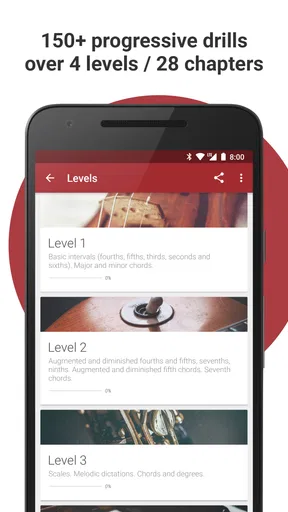
The app offers a structured learning path, which is perfect for those who, like me, thrive on a bit of guidance. You start off with basic intervals and gradually move to more complex chords and scales. It's like having a personal music teacher in your pocket!
The Training Modules
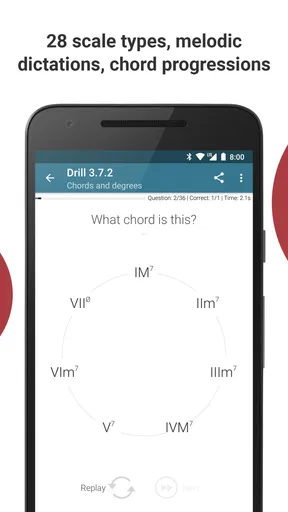
Now, let's talk about the heart of this app – the training modules. There are over 150 exercises, and they cover a wide range of skills. From identifying simple intervals to recognizing intricate chord progressions, there's something for every level.
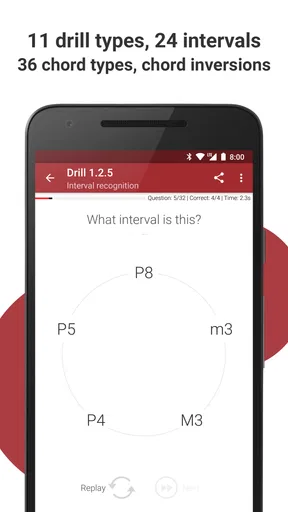
My personal favorite has to be the interval identification module. It's amazing how quickly you start to recognize the difference between a major third and a perfect fifth. The app provides instant feedback, which is crucial for learning. If you get a note wrong, no worries – it encourages you to try again without making you feel like you've hit a wall.
Gamification and Progress Tracking
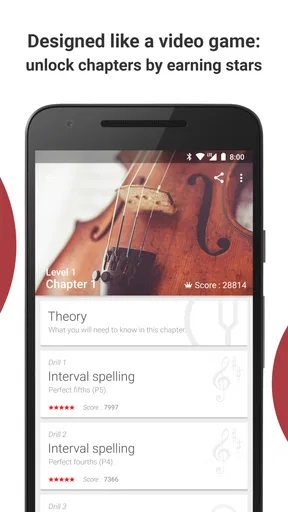
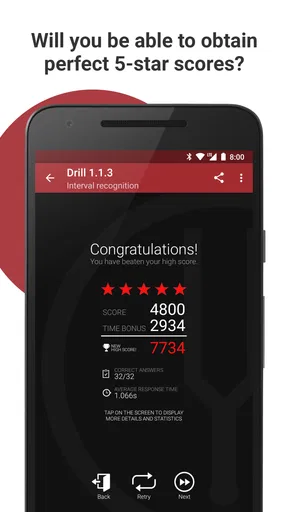
One thing that makes Complete Ear Trainer stand out is its gamified approach. You're not just clicking through exercises; you're on a mission to level up your ear training skills. As you progress, you earn stars and unlock new challenges. It’s a bit like playing a video game, but instead of leveling up a character, you're leveling up your musical abilities.
There's also a nifty progress tracking feature. It lets you see how far you've come and what areas need more attention. It's super motivating to watch your skills improve over time. Plus, the app's reminders nudge you to practice regularly, ensuring you don't slack off.
Customization and User Experience
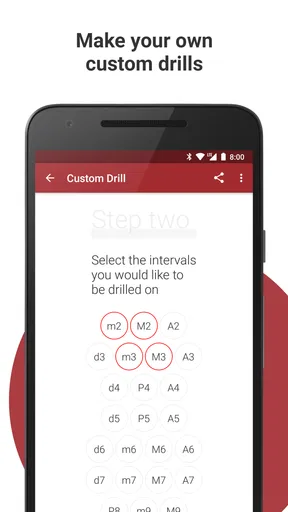
Customization is another strong suit of this app. You can tailor exercises to suit your current level or focus on specific areas you want to improve. Whether you're working on ear training for personal enjoyment or as part of a formal music education, the app adapts to your needs.
The user experience is seamless. The interface is visually appealing, with a mix of vibrant colors and clear icons that make navigation a breeze. Even if you're not tech-savvy, you won't find yourself lost in a sea of settings. The developers clearly put a lot of thought into making this app accessible to everyone.
How it compares with other ways to practise
Compared with a generic music-learning app, this game is more concentrated: I’m here to listen and identify, not to follow a broad course that mixes instrument lessons, theory, and performance. Compared with flashcards or self-made quizzes, its immediate response and progression give practice a clearer rhythm. The trade-off is that a quiz can make recognition feel more certain than it is in a real song, where timbre, tuning, context, and musical phrasing all affect what I hear.
I would use it alongside real music, not instead of it. One useful habit is to pause after an answer and sing the sound back before moving on. Another is to practise a skill in the app, then listen for it in a familiar track or try to reproduce it on an instrument. If I only chase stars, I may become better at choosing an answer in the game without building the same confidence when music is moving around me.
Keeping practice useful rather than mechanical
The structured path is a good starting point, but it need not dictate every session. When a particular interval or chord keeps tripping me up, focusing on that area is more useful than pushing ahead just because the next challenge is available. On a day when my attention is scattered, I would keep the session brief and stop while I can still listen carefully; tired guessing is not the same as productive repetition.
There is also a useful distinction between hearing a sound correctly and understanding its musical role. The app can help train recognition, but the next step is applying that recognition to melody, harmony, or playing. For a singer, that might mean matching a sound with the voice; for an instrumentalist, it could mean finding it by ear. Those are practical bridges from screen-based answers to music-making, and they take effort beyond simply completing a challenge.
Who will get the most from it
I’d recommend it most to learners who want regular, guided listening practice and are willing to repeat difficult material. Someone returning to music after a break may also appreciate having a clear, low-pressure way to refresh interval and chord recognition. The game format gives a small reason to come back, while the focus on listening makes it different from simply running scales or practising finger patterns.
I would skip it if I wanted a complete music curriculum, detailed feedback on my playing, or a substitute for lessons. It is also not the best fit for someone who dislikes quiz-style repetition or wants every exercise explained through a long theory lesson. In those cases, a teacher, a theory resource, or practice with actual recordings may offer context that a focused ear-training game cannot. The optional purchases are another consideration: the basic game is free, but anyone who prefers to avoid spending should check what is available to them before relying on a particular part of the experience.
When the loop works—and when it doesn’t
The satisfying pattern here is simple: I listen, make a choice, get feedback, and decide whether to try again or move on. A correct response offers a small reward and a reason to continue; a wrong one gives me a chance to reset my attention and hear the distinction again. Progress and unlocked challenges can make that next session appealing, but they are most valuable when they support a musical goal rather than become the goal themselves.
That is why I would think of this as a practice companion, not a shortcut to a trained ear. Improvement comes from attentive repetition and from carrying the sounds into singing, playing, and listening away from the screen. If the game helps me return to that work consistently, its loop is doing something worthwhile. If I find myself tapping answers without really listening, I’d change the exercise or take a break instead of mistaking activity for progress.
Final Thoughts
In conclusion, Complete Ear Trainer is a fantastic tool for anyone looking to hone their ear for music. Whether you're a budding musician or an experienced player wanting to refine your skills, this app has something to offer. The combination of structured learning, gamification, and customization makes it a comprehensive package that’s hard to beat.
So, if you're ready to embark on a musical journey and unlock the mysteries of melodies, give Complete Ear Trainer a try. Your ears will be in for a treat, and you might just find yourself understanding music on a whole new level.
Verdict
Strengths of Complete Ear Trainer
- Comprehensive lessons for all skill levels.
- User-friendly interface with intuitive navigation.
- Customizable exercises for personalized learning.
- Tracks progress with detailed statistics.
- Supports offline mode for learning on-the-go.
Limitations of Complete Ear Trainer
- Limited free content; many features require purchase.
- Occasional bugs in the exercise modules.
- Some users find the interface slightly outdated.
- Requires significant storage space on device.
- No social features for community interaction.
Other Releases by Binary Guilt Software
View All
Complete Music Reading Trainer
Music4.6

Complete Rhythm Trainer
Music4.6
Similar Picks in This Category
View All
Tiles Hop Music & Ball Game
AMANOTES PTE. LTD.4.3

Magic Tiles 3™ - Piano Game
AMANOTES PTE. LTD.4.6

Real Piano
Bilkon3.7

Piano Game: Classic Music Song
Dream Tiles Piano Game Studio4.0

Smash Colors: Music Ball Rush
BADSNOWBALL HONGKONG LIMITED4.2

Piano Music Go-EDM Piano Games
Joy Journey Music Games4.5
Frequently Asked Questions
What is Complete Ear Trainer and what does it offer?
Complete Ear Trainer is an educational app designed to help users improve their musical ear. It offers a comprehensive set of exercises aimed at enhancing your ability to recognize chords, intervals, and scales. The app is suitable for musicians of all levels, providing a structured learning path and customizable lessons to suit individual needs.
Is Complete Ear Trainer suitable for beginners?
Yes, Complete Ear Trainer is designed to be accessible for beginners while still offering advanced exercises for more experienced musicians. It starts with basic ear training exercises and gradually introduces more complex concepts, ensuring a smooth learning curve. The app provides tutorials and guidance to help beginners understand fundamental music theory.
How does the progression system work in Complete Ear Trainer?
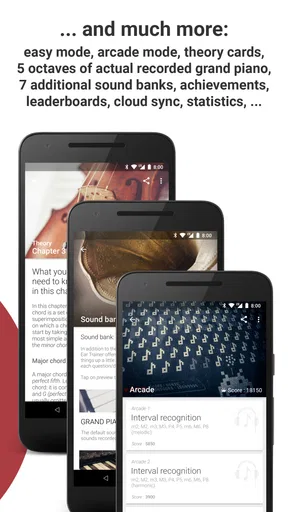
The progression system in Complete Ear Trainer is based on a series of levels and challenges that increase in difficulty as you advance. The app tracks your performance and provides feedback, allowing you to unlock new exercises and features as you improve. This system ensures continuous engagement and helps keep users motivated to reach their ear training goals.
Can I customize the exercises in Complete Ear Trainer?
Yes, Complete Ear Trainer allows for extensive customization of exercises to fit your learning preferences. Users can adjust the difficulty level, choose specific intervals, chords, or scales to focus on, and set personalized goals. This flexibility makes it an ideal tool for both self-directed learning and structured practice sessions.
Does Complete Ear Trainer require an internet connection?
Complete Ear Trainer does not require an internet connection for the majority of its features, making it accessible for practice anytime and anywhere. However, some features, such as updates or cloud backups, might require periodic internet access. This offline capability ensures that users can practice consistently without connectivity issues.
Play our best games!


